Parking facilities don’t stop operating when business hours end. Some facilities have 24-hour transient parking, overnight monthly parker presence, or late-night event egress. Even facilities that are nominally “closed” at night have vehicles present (overnight monthly parkers, vehicles left by travelers) and infrastructure (PARCS equipment, lighting, CCTV systems) that requires monitoring. After-hours operations — with reduced or absent staff — require specific protocols that differ from daytime operations.
Defining After-Hours Operations Levels
Not all facilities have the same after-hours operational model. Defining the level before setting protocols is essential:
24-hour attended operation: Staff present throughout. Staffing and escalation protocols are an extension of daytime procedures, with additional emphasis on security patrol during low-traffic hours.
Partially attended: Facility operates unattended during off-peak night hours (midnight to 5 a.m.) but with attended lanes during evening peaks (5 to midnight). Equipment operates in unattended mode during the unstaffed window. Emergency response is via intercom to a remote answering service or central monitoring.
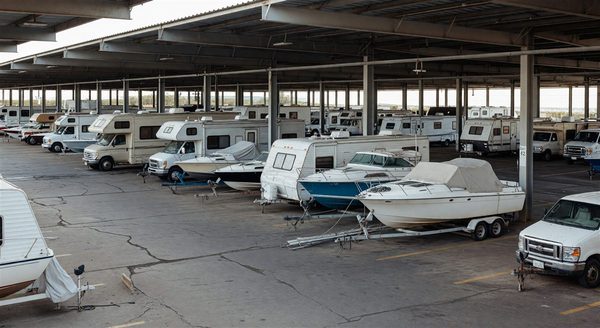
Unattended overnight with vehicles present: Facility closes to new entry at a defined time but vehicles present at closing may remain overnight (monthly parkers, airport long-term). No staff on-site. Security monitoring via CCTV, with a defined response protocol for alarms or intercom calls.
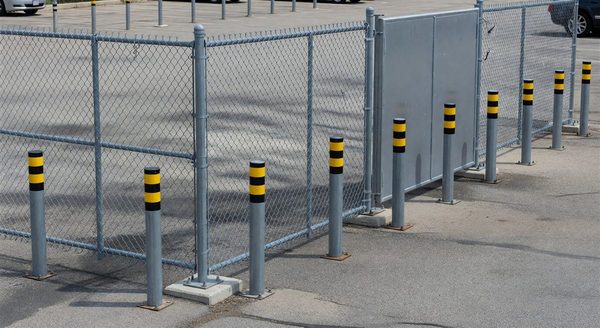
Fully closed: No vehicles permitted after closing. Perimeter gates or barriers close to prevent after-hours entry. On-site patrol by contract security or remote monitoring.
Security Patrol for Night Operations
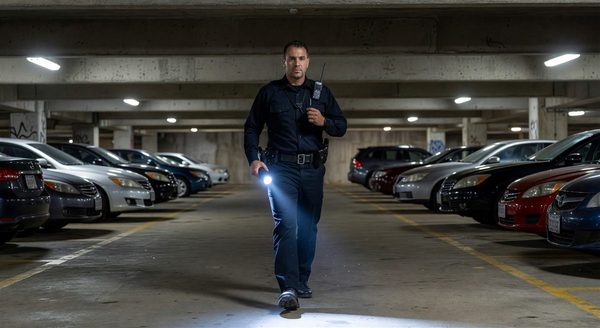
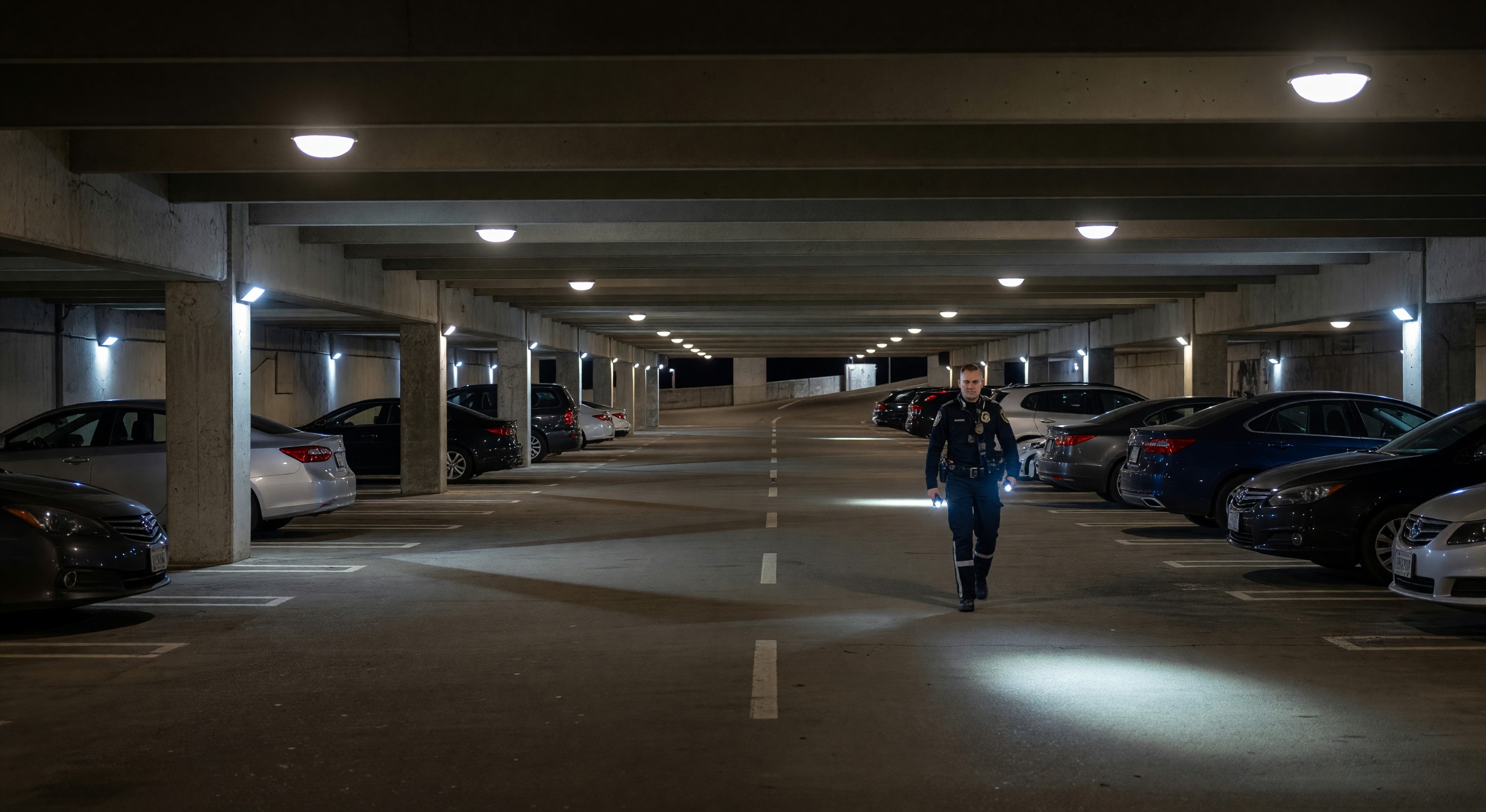
Night hours present higher security risk than daytime in most parking facilities — reduced natural surveillance, fewer witnesses, and easier concealment for offenders. Security protocols for night operations:
Patrol frequency: High-risk facilities (urban, known crime areas) should have physical security patrol every 30 to 60 minutes throughout the night. Lower-risk facilities may reduce to every 90 to 120 minutes. Patrols should be logged with timestamps and coverage documentation.
CCTV monitoring: If the facility has live-monitoring CCTV capability, night operations should include either on-site monitoring or contract to a central station that monitors the facility feeds. Alert protocols for specific triggering events (motion in closed areas, perimeter breach detection, vehicle door-open events) should be configured.
Emergency call button response: Facilities with emergency call buttons (PARCS intercoms, blue-light phones, elevator emergency phones) must have a live answering capability 24 hours. This may be a staffed on-site position, a remote answering service, or a central monitoring center. The response time from a customer activating an emergency call to a live voice must be documented — industry standard is answer within 30 seconds.
Emergency Contact Protocols
The most important night operations document is the emergency contact list — who is called in what order for what types of emergencies. This document should be posted at the facility, stored in the PARCS system management console, and accessible to the remote monitoring service.
Emergency contact list structure:
- Medical emergency: 911 (always first); then facility manager; then property owner
- Vehicle accident: 911 for injuries; facility manager for documentation; property owner for property damage
- Theft in progress: 911; then facility manager
- Equipment failure (gate down): PARCS vendor 24-hour emergency line (confirm this is a real 24/7 number and not just an after-hours voicemail); then facility manager
- Structural damage or safety hazard: Facility manager; property owner; structural engineer for safety assessment
- Fire: 911; then facility manager; then property owner; then building management if applicable
Review and update the contact list quarterly. Outdated contact information on an emergency list defeats its entire purpose.
Unattended Equipment Operation
When PARCS operates in unattended mode overnight, specific configuration and monitoring requirements apply:
Rate configuration: Unattended overnight rates may differ from daytime rates. Ensure the PARCS rate schedule correctly applies the intended overnight rate and transitions correctly at the rate change time.
Remote monitoring: Many PARCS systems support remote status monitoring — operators can monitor equipment operational status, transaction activity, and alarm conditions from a web or mobile interface. Enable this capability and confirm the facility manager has mobile access with active notifications for equipment alarms.
Intercom routing: In unattended mode, customer service calls at entry and exit intercoms must route to a live answering point. Test intercom routing in unattended mode before relying on it for actual operation. Intercom routing failures (calls going to an unmonitored line) during unattended operation leave customers stranded with no assistance.
Gate failure protocol: Document and post at the facility the procedure for gate failures during unattended operation: intercom to answering service; answering service contacts on-call technician; technician determines if remote reset is possible or dispatch is needed. The time from failure to resolution should be targeted at under 2 hours for critical failures.
Overnight Incident Response
Incidents during overnight hours require the same documentation and response as daytime incidents, but without on-site staff the initial response may fall to the monitoring service, a security contractor, or law enforcement:
Remote incident response procedure:
- Monitoring service or security patrol identifies or receives report of incident
- If emergency: call 911 immediately
- Preserve CCTV footage immediately for the incident location and time
- Contact on-call facility manager to notify of incident and required response
- Facility manager or designee responds to the facility if the situation requires on-site presence
- Complete incident report at the earliest practical time (same night for major incidents; next morning for minor incidents)
Frequently Asked Questions
What is the minimum security requirement for an unattended overnight parking facility? Functional CCTV covering all areas with sufficient storage retention, emergency call capability with live answering within 30 seconds, equipment monitoring with remote alert capability, and a documented emergency contact and response protocol. Physical patrol is recommended for higher-risk environments.
How quickly must a 24-hour emergency call button be answered? Industry standard is 30 seconds from activation to a live voice response. This applies to emergency phones, elevator emergency calls, and PARCS intercom calls routed to the after-hours answering point. Document and test this response time regularly.
Who should be on the facility emergency contact list? At minimum: 911 for emergencies, PARCS vendor 24-hour emergency line, facility manager (mobile), property owner or property management emergency contact, and any critical service vendors (elevator emergency, fire suppression monitoring). Review and update quarterly.
What CCTV retention is needed for overnight operation? A minimum of 30 days of retention for all footage is needed to support investigation of incidents that are reported days or weeks after occurrence. Overnight incidents are often discovered the following morning or later — short retention periods eliminate forensic evidence.
Takeaway
After-hours parking operations are not simply a lower-intensity version of daytime operations — they require purpose-designed security protocols, equipment monitoring, emergency response capabilities, and contact lists that function without the on-site staff presence that daytime operations depend on. The facilities that manage overnight operations well do so because they have thought through, documented, and tested their procedures before the first late-night equipment failure or security incident occurs. Preparation, not improvisation, is the standard for professional after-hours parking operations.
Further Reading from Authoritative Sources
- IPMI parking security standards for after-hours and overnight operations — IPMI publishes security standards for parking facilities including overnight and after-hours operation protocols, providing the authoritative industry benchmarks for the response times and minimum security requirements described in this article.
- US DOE lighting guidance for parking facility security and overnight operations — The DOE’s parking garage lighting resources cover nighttime security illuminance requirements that directly support effective overnight CCTV monitoring and security patrol described in this article, connecting lighting standards to after-hours security outcomes.