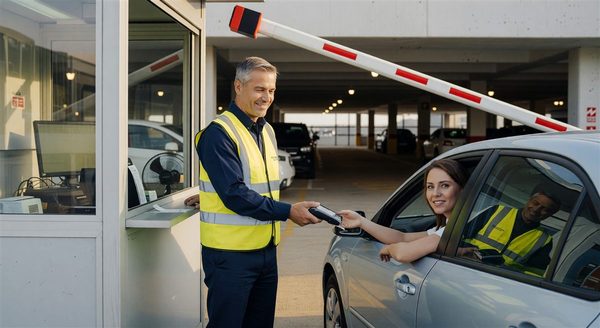
Lost property and abandoned vehicles are operational realities in any active parking facility. Customers leave property in their vehicles, lose items in parking areas, or — in longer-term lots — leave vehicles well beyond their paid period without contact. Having documented procedures for handling both situations protects the operator legally, creates a professional customer service experience, and ensures compliance with applicable state and local abandoned property and vehicle laws.
Lost Property Procedures
Property discovered by staff: When a parking attendant or security officer discovers property that appears to have been lost (wallet, keys, clothing, electronics, documents), the discovery should be:
- Documented immediately: date, time, location within the facility, description of item, name of staff member who found it
- Secured in a designated lost and found storage location (not in the cashier booth drawer or personal staff space)
- Logged in the facility’s lost and found register
- High-value items (electronics, wallets, jewelry) should be documented with photographs before storage
Customer reporting lost property: When a customer reports missing property, pull the lost and found log to check if the item has been found. If not found, take the customer’s contact information and description of the item for follow-up contact if the item is later recovered.
Property with identifying information: Property containing identification (wallet with ID, keys with a name tag, phone that can be unlocked) should be used to contact the owner if readily possible. Contact within 24 hours is best practice; waiting days or weeks is poor customer service.
Unclaimed property holding period: Define a holding period (typically 30 to 90 days) after which unclaimed property is disposed of per applicable state unclaimed property law. High-value items may be held longer and eventually turned over to law enforcement or donated to charity. Document the disposal method and date for each item.
Property containing personal documents: Drivers licenses, passports, credit cards, and similar identity documents should be turned over to law enforcement (not held by the facility indefinitely) to enable proper return to the owner or appropriate handling if identity theft is suspected.
Abandoned Vehicle Procedures
Abandoned vehicles — those left in the facility beyond the paid period without owner contact — create operational, liability, and legal complications:
Definition of abandoned: Most state vehicle codes define a vehicle as abandoned after it has been left on private property for a specified period without the owner’s permission. This period varies by state: 24 to 72 hours is typical for high-turnover commercial lots; 30 to 90 days for long-term storage facilities. Some municipalities have shorter thresholds.
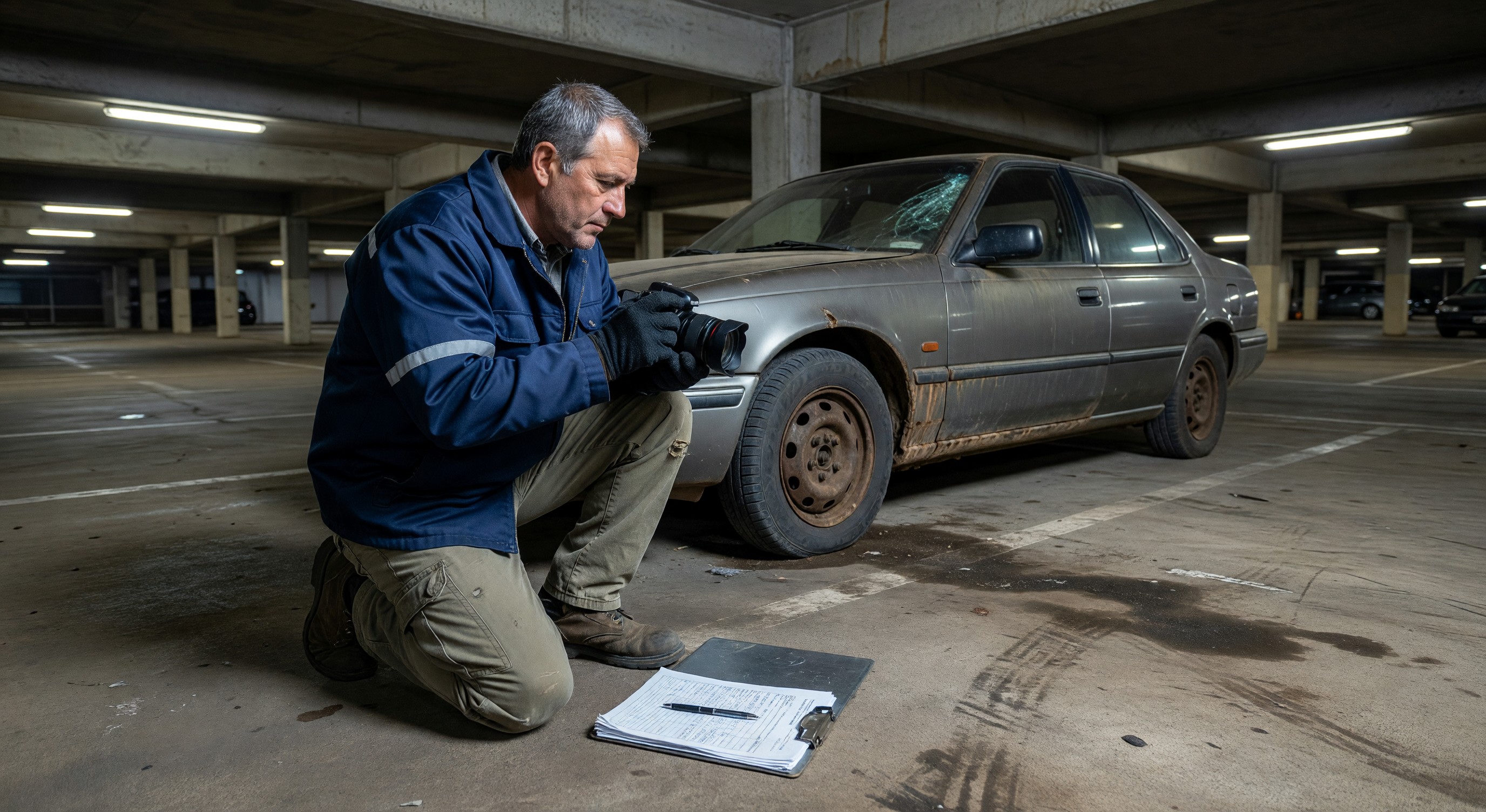
Initial documentation: When a vehicle is identified as potentially abandoned (overstayed the paid period with no payment or contact):
- Photograph the vehicle (all sides, license plate, condition)
- Record the date and time of first observation
- Run the plate through the PARCS system to identify if the vehicle belongs to a monthly parker or has an active parking account
- Check if any payment or communication has been received that the records might not reflect
Notification attempt: Before any enforcement action, most state abandoned vehicle statutes require an attempt to notify the owner. If the vehicle is registered, the registration record can be used to identify the owner (through law enforcement, not the parking operator directly — operators typically cannot directly access DMV records without authorization).
Law enforcement notification: After the holding period and notification attempt, contact local law enforcement to report the abandoned vehicle. Law enforcement will run the plate, attempt owner contact through registered owner information, and authorize towing if appropriate under state law.
Towing for abandoned vehicles: Towing an abandoned vehicle without appropriate law enforcement authorization and state law compliance can create liability for the towing operator and the parking facility. Follow the process established by local law enforcement and the state vehicle code.
Vehicles with apparent value: A vehicle that appears to have significant value (newer model, good condition, no signs of intentional abandonment) is more likely to be a situation where the owner has lost contact, been incapacitated, or experienced an emergency. Approach these situations with additional care and stronger effort to locate the owner before towing.
Monthly Parker Abandoned Vehicles
Monthly parkers who leave vehicles beyond their permit term present a distinct situation:
- Contact the account holder at the information on file (phone, email)
- If no response within a defined period (typically 7 to 14 days), escalate to certified mail to the address on file
- If no response to certified mail, contact law enforcement per state abandoned vehicle procedures
The storage agreement (for long-term lot monthly accounts) should define the operator’s rights and the parker’s obligations regarding vehicles left beyond the agreement term. This agreement provides the legal framework for actions beyond the standard term.
Record-Keeping Requirements
Maintain records for:
- All lost and found property (date found, description, storage location, contact attempts, disposition)
- All abandoned vehicle discoveries (date, plate, photographs, notification attempts, law enforcement contact, final disposition)
Retention: Minimum 3 years for all records. State unclaimed property and abandoned vehicle laws may require longer retention or reporting to state authorities for property above value thresholds.
Frequently Asked Questions
How long should a parking facility hold lost property before disposing of it? 30 to 90 days is standard. High-value items and items with identifying information may warrant longer holding. Consult applicable state unclaimed property law for the specific jurisdiction, as some states have mandatory reporting requirements for property above a defined value held beyond a defined period.
What is the legal process for towing an abandoned vehicle from a private parking lot? Abandoned vehicle towing from private property requires compliance with the applicable state vehicle code, which typically includes a minimum holding period after first observation, a notification attempt to the registered owner, and law enforcement notification or authorization before towing. Do not tow without completing this process.
Can a parking facility operator access DMV records to identify an abandoned vehicle’s owner? Generally, no. DMV records are protected under the Driver’s Privacy Protection Act (DPPA). Law enforcement can access registered owner information; parking facility operators typically cannot do so directly. Contact law enforcement to assist with owner identification for abandoned vehicles.
What should be done with property that contains personal identification documents? Turn over to law enforcement, not retain in facility lost and found storage. Law enforcement can use proper channels to return identification to the owner or handle as potentially stolen property if identity theft is suspected.
Takeaway
Lost property and abandoned vehicle procedures are operational and legal matters that require documented policies, consistent execution, and compliance with applicable state and local law. Facilities with clear procedures — a documented lost and found log, prompt contact attempts for found property with identifying information, and a compliant abandoned vehicle process that involves law enforcement appropriately — handle these situations professionally while protecting the facility from liability. Informal handling of both lost property and abandoned vehicles creates the very liability the procedures are designed to prevent.
Further Reading from Authoritative Sources
- IPMI parking operations best practices and customer service standards — The International Parking and Mobility Institute publishes operational standards for parking management that provide the professional framework for lost and found procedures in parking facilities.
- Driver’s Privacy Protection Act and vehicle record access regulations — The U.S.