When specifying parking equipment for a new facility or upgrade project, operators face a fundamental choice: buy commodity hardware and adapt it to parking, or work with manufacturers that design and build specifically for the parking industry.
The difference matters more than most procurement teams realize.
The Parking Equipment Landscape
The parking equipment market includes everything from barrier gates and pay stations to access control readers, ticket dispensers, signage, and management software. According to Parking Network, the global parking equipment market continues to grow as facilities modernize. Some manufacturers produce the full range. Others specialize in specific product categories.
What distinguishes dedicated parking equipment manufacturers from general hardware suppliers is specialization. A company that builds parking pay stations all day, every day, understands the environmental stresses, usage patterns, and integration requirements that general-purpose kiosk manufacturers may not.
Why Purpose-Built Equipment Performs Better
Environmental Resilience
Parking equipment operates in conditions that would destroy typical consumer or office electronics. Pay stations bake in summer sun, freeze in winter, get rained on, and accumulate road dust and salt. Barrier gates cycle thousands of times per day in temperatures ranging from -40°F to 120°F.
Purpose-built parking equipment is designed for these conditions from the ground up:
- NEMA 3R or 4 rated enclosures for weather protection
- Operating temperature ranges of -30°C to +60°C
- Anti-vandal construction with reinforced housings
- UV-resistant displays and panels
Integration Depth
A parking pay station doesn’t exist in isolation. It needs to communicate with barrier gates, access control systems, management software, payment processors, and potentially guidance systems. Dedicated parking manufacturers design their equipment to integrate natively with these systems.
Generic kiosk hardware often requires custom middleware, third-party integration software, and ongoing maintenance to keep disparate systems talking to each other.
Compliance and Certification
Parking payment equipment must meet specific industry standards:
- PCI DSS compliance for credit card data security
- ADA accessibility requirements for height, reach, and display contrast
- UL/CSA electrical safety certifications
- EMV certification for chip card processing (increasingly required)
Manufacturers that focus on parking have already navigated these certification processes. They understand the requirements and build compliance into their designs rather than retrofitting it.
The Customization Question
Every parking facility is different. A hospital parking system has different requirements than a municipal garage, which differs from an airport long-term lot. Traffic volumes, payment methods, access credentials, reporting needs, and physical layouts vary enormously.
Dedicated manufacturers offer customization at several levels:
| Level | Example | Impact |
|---|---|---|
| Software configuration | Custom rate tables, validation rules, time zones | Operations |
| Interface customization | Branded screens, multilingual support, receipt formats | User experience |
| Hardware modification | Custom colors, mounting configurations, peripheral integration | Physical fit |
| System architecture | Networked vs. standalone, cloud vs. on-premise, redundancy options | Scalability |
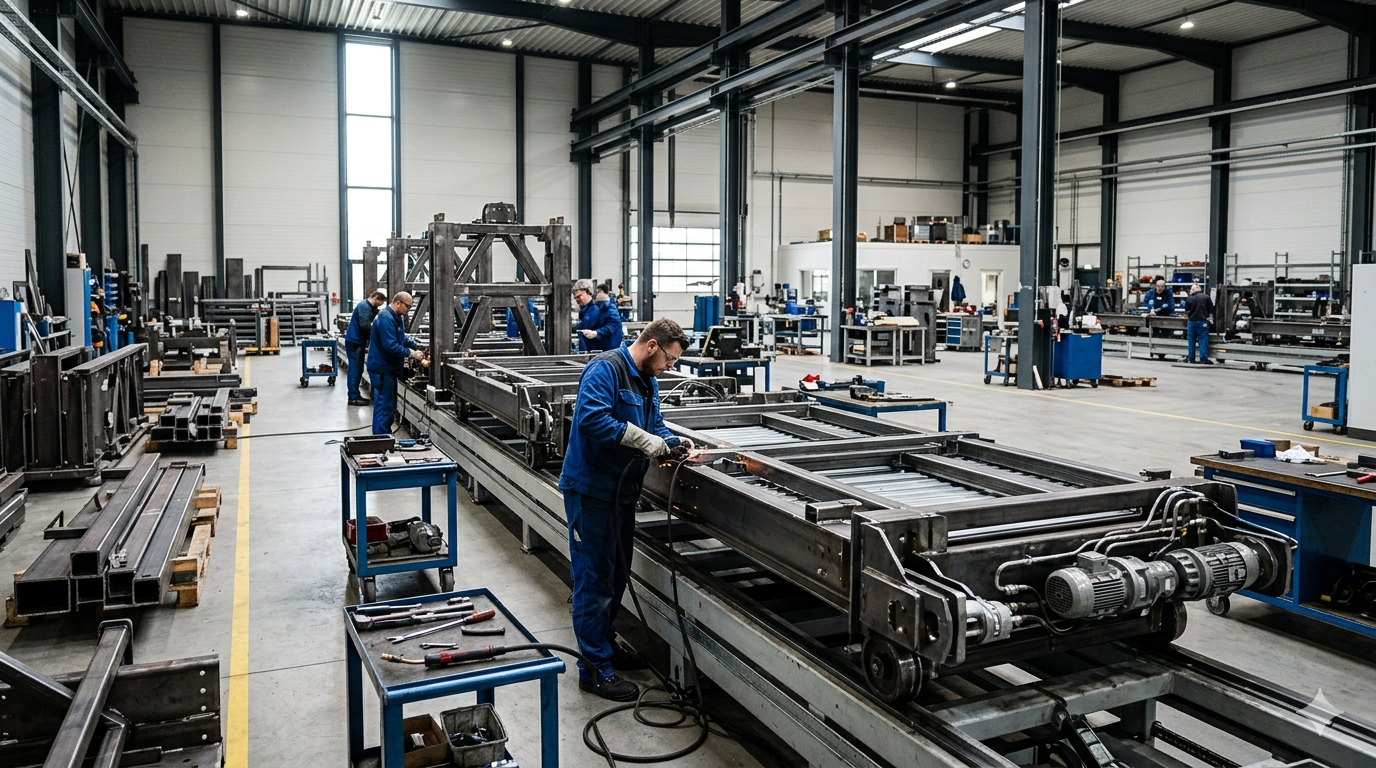
Some manufacturers, including companies like Parking BOXX that have established dedicated manufacturing facilities, offer deep customization capabilities that mass-market hardware suppliers simply can’t match. When your equipment is built to order rather than pulled from a warehouse, the customization possibilities expand significantly.
Total Cost of Ownership
The purchase price of parking equipment is typically 30-40% of the total cost of ownership over a 10-year lifecycle. The remaining 60-70% comes from:
- Installation and commissioning — Purpose-built equipment with native integration reduces installation time
- Maintenance and repair — Equipment designed for parking environments requires less frequent maintenance
- Software updates — Manufacturers that control both hardware and software can push updates more efficiently
- Parts availability — Dedicated manufacturers maintain parts inventories specific to their parking products
- Downtime costs — Equipment failures in a revenue-generating parking facility have direct financial impact
When you factor in these lifecycle costs, purpose-built parking equipment from a dedicated manufacturer often costs less over 10 years than cheaper generic hardware that requires more maintenance, more integration work, and more frequent replacement.
What to Look For in a Manufacturer
When evaluating parking equipment manufacturers, consider:
- Industry focus — What percentage of their business is parking? A company that derives 90%+ of revenue from parking products is more likely to understand your needs than one where parking is a side business
- Vertical integration — Do they design, manufacture, and support their own products, or are they assembling third-party components?
- Reference installations — Can they show you working installations similar to your facility type and size?
- Certification portfolio — PCI, EMV, ADA, UL/CSA — which certifications have they achieved?
- Support infrastructure — What does post-installation support look like? Remote diagnostics? On-site service? Parts availability?
- Financial stability — Parking equipment is a long-term investment. Will the manufacturer be around in 10 years to support it?
The Manufacturing Location Factor
Where equipment is manufactured affects lead times, shipping costs, and service responsiveness. North American manufacturers can typically deliver faster and provide more responsive service than overseas suppliers. This is particularly important for custom-configured systems and warranty service.
Several parking equipment manufacturers have invested in North American manufacturing capabilities specifically to serve the parking market with shorter lead times and better service proximity.
Key Takeaways
- Purpose-built parking equipment outperforms adapted generic hardware in durability, integration, and compliance
- Total cost of ownership over 10 years is often lower with dedicated parking equipment despite higher upfront costs
- Customization capabilities are critical for matching equipment to specific facility requirements
- Manufacturer specialization, certifications, and support infrastructure should weigh heavily in procurement decisions
- North American manufacturing provides advantages in lead time and service responsiveness
Frequently Asked Questions
What payment card compliance certification must parking equipment meet? Parking equipment that accepts payment cards must use hardware and software certified under the Payment Card Industry Data Security Standard (PCI DSS), maintained by the PCI Security Standards Council. For unattended payment terminals — the most common configuration in parking — the terminal hardware must be listed on the PCI SSC’s approved PTS device list, and the payment application must be PA-DSS certified or use a validated point-to-point encryption (P2PE) solution.
What ADA requirements apply to parking payment terminals and equipment? Parking payment terminals and pay-on-foot stations must comply with ADA Standards for Accessible Design, which require that interactive elements be reachable from a wheelchair (operable reach range 15 to 48 inches above the floor), that display screens be readable without color differentiation alone, that audio assistance be available, and that payment slots and card readers be usable without tight grasping or twisting. Terminals installed in the public right-of-way must additionally comply with PROWAG (Public Rights-of-Way Accessibility Guidelines).
What is the total cost of ownership split between purchase price and lifecycle costs for parking equipment? Industry analysis consistently shows that purchase price represents only 30 to 40 percent of total cost of ownership for parking equipment, with the remaining 60 to 70 percent attributable to lifecycle costs — software licensing, maintenance contracts, consumables, networking, and eventual replacement components. Procurement decisions that focus on lowest purchase price without evaluating these ongoing costs frequently result in higher total cost over a 7 to 10 year equipment lifecycle.
What EMV certification means for parking equipment and why does it matter? EMV certification indicates that a payment terminal is certified to process chip-based payment card transactions per the EMVCo standard — the international framework for chip card security. Since the U.S. card network liability shift in October 2015, merchants operating non-EMV-compliant terminals bear fraud liability for counterfeit card transactions that EMV-compliant terminals would have prevented. Parking operators using non-EMV equipment face elevated fraud liability exposure on every card transaction.
How should parking operators evaluate equipment manufacturer financial stability? Equipment manufacturer financial stability matters because parking equipment typically has a 7 to 15 year service life requiring ongoing parts, software updates, and technical support from the manufacturer. Operators should evaluate whether the manufacturer is publicly traded or privately held, request financial references from other large clients, investigate the manufacturer’s duration in the parking industry, and assess contractual protections — such as source code escrow for software or parts inventory commitments — that protect operations if the manufacturer is acquired or exits the market.