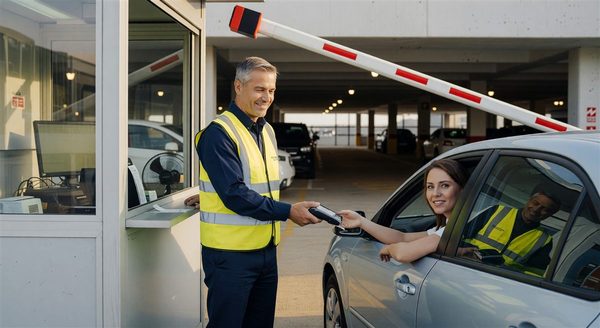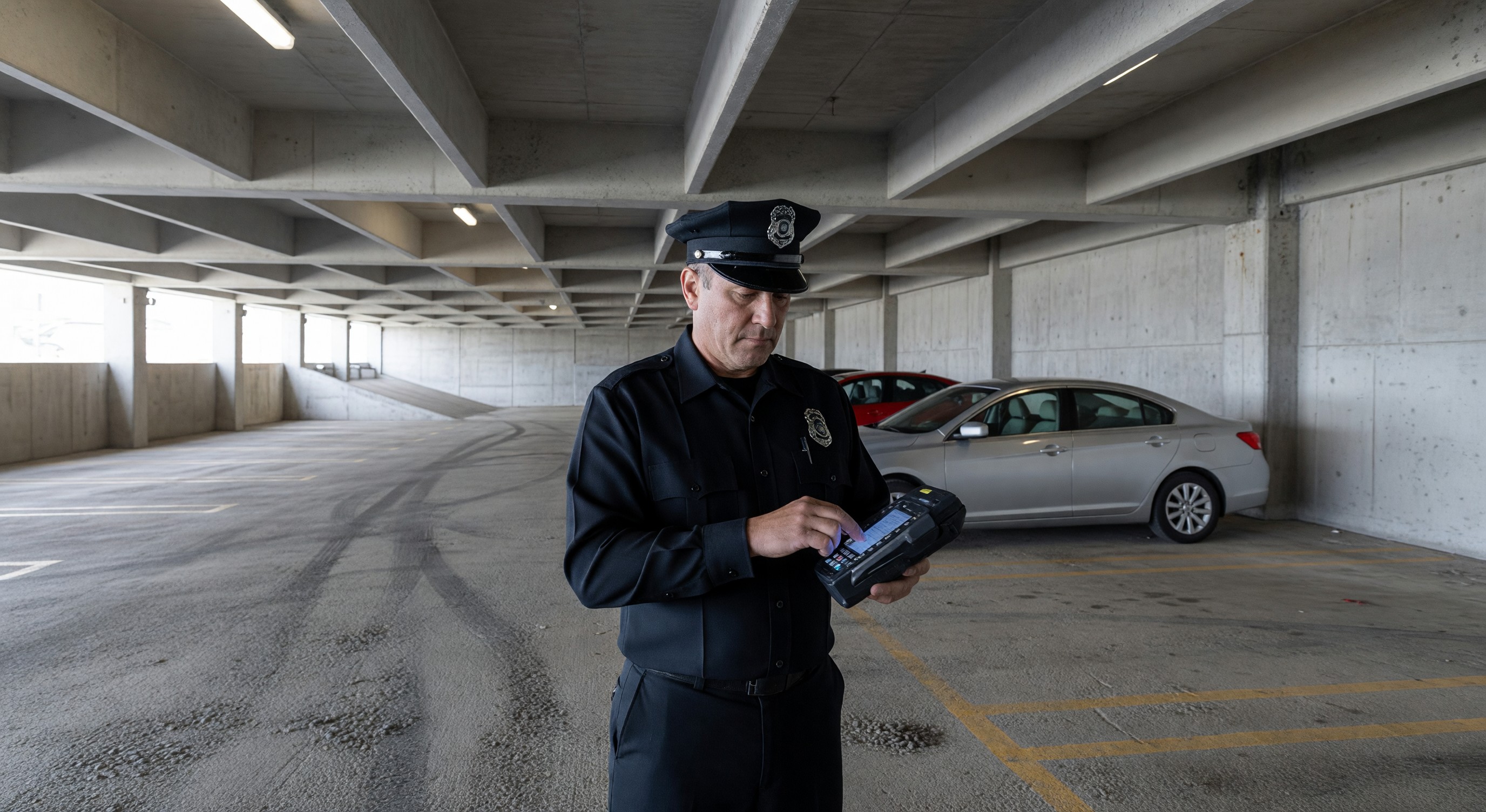
Parking enforcement is the operational mechanism that keeps parking resources working as designed — time limits turn over stalls for multiple users, permit restrictions protect reserved spaces, and payment requirements fund facility operation. Enforcement without policy is arbitrary; policy without enforcement is ineffective. Effective parking enforcement programs apply consistent, fair, legally compliant procedures that protect the operational integrity of the parking system while treating parkers equitably.
The Purpose of Parking Enforcement
Enforcement tools are means to operational ends, not ends in themselves. Before selecting enforcement methods, operators should be clear on the specific outcomes they are trying to protect:
- Time limit compliance: Ensuring stalls are available for multiple users throughout the day (retail, short-term commercial parking)
- Reserved/permit space protection: Ensuring reserved stalls are available for their authorized users (monthly parkers, accessible spaces, loading zones)
- Payment compliance: Ensuring that users who park without paying are identified and charged appropriately
- Safety zone protection: Ensuring fire lanes, pedestrian crossings, and no-parking zones remain clear
Each enforcement objective requires different tools, patrol patterns, and escalation responses. A one-size-fits-all enforcement approach that treats time limit violations the same as accessible stall violations or payment evasion is both operationally inefficient and legally problematic.
License Plate Recognition (LPR) Enforcement
LPR-based enforcement uses vehicle-mounted or fixed cameras to capture license plates, which are then compared against permit databases, time-limit violation records, and payment records. LPR has largely displaced traditional “chalk” enforcement for time-limit compliance in jurisdictions with high-volume enforcement programs.
Mobile LPR: Camera-equipped patrol vehicles drive through parking areas, capturing plate images that are automatically compared against the permit database and flagged for violations. In time-limited zones, the system records the first observation of a vehicle (time-stamped with GPS location) and flags the vehicle if it is still present at the same location after the time limit has expired. Mobile LPR can cover several hundred stalls per hour, dramatically increasing enforcement efficiency over manual methods.
Fixed LPR: Cameras mounted at entry/exit lanes or at fixed locations within the parking area capture plates as vehicles enter and exit. Fixed LPR is the foundation of virtual permit systems (where LPR replaces physical hang tags) and pay-by-plate enforcement (where payment is associated with the plate rather than a ticket or hang tag).
Accuracy and appeals: LPR accuracy rates for modern systems are typically 95 to 99 percent under good conditions, but plate capture failures (dirty plates, obscured characters, state-specific plate designs) generate false violations. Any LPR enforcement program must include a robust appeals process that allows parkers to challenge errors. Appeals processes should be accessible by mail, phone, and online, with documented resolution timelines.
Traditional Chalk Enforcement
Chalk marking of tires — the traditional method of documenting vehicle presence for time-limit enforcement — remains in use in some municipal and private contexts, though it is increasingly challenged. The 6th U.S. Circuit Court of Appeals ruled in 2019 (Taylor v. City of Saginaw) that tire chalking without a warrant may constitute an unreasonable search under the Fourth Amendment. The legal status of chalk marking varies by jurisdiction; operators should review the current legal status with counsel before relying on chalk enforcement.
Where chalk remains in use, standard procedures:
- Mark one tire on each vehicle at the time of initial observation with a chalk line aligned with a fixed reference (crack, marker, or specific point)
- Return at the expiration of the time limit
- If the chalk mark remains at the original position (indicating the vehicle has not moved), issue a citation
- Document in the citation: date, time of initial observation, time limit, time of citation issuance, and plate/description of vehicle
Immobilization (Booting) Policies
Wheel immobilization (booting) is appropriate for:
- Chronic violators with multiple unpaid citations
- Vehicles parked in fire lanes or other safety-critical no-parking areas
- Vehicles blocking accessible spaces in private lot operations
Boot policies must comply with applicable state and local law. Most jurisdictions regulate the minimum outstanding violation balance that triggers booting eligibility, required notice to the vehicle owner after booting, release procedures and fee limits, and maximum duration before a booted vehicle must be towed.
Best practices for booting programs:
- Post clear signage that states booting is in effect
- Provide a 24-hour release telephone number
- Respond to release calls promptly (industry standard is 30 to 60 minutes for attended operations)
- Inspect the vehicle for existing damage before booting and document with photographs
- Provide a receipt for the boot release fee
Towing Policies
Towing is the highest-intensity enforcement action — it removes the vehicle from the premises entirely, creating significant inconvenience and cost for the vehicle owner. Towing should be reserved for situations where lesser measures are insufficient: chronic non-payment, fire lane or safety zone blocking, or extended abandoned vehicle situations.
State law governs notification requirements, towing company authorization processes, impound fee limits, and reclaim procedures. Operators should work with qualified legal counsel to ensure their towing policy complies with applicable law and that towing agreements with the selected towing company document the legal basis for each tow.
Equity Considerations in Enforcement
Parking enforcement has documented equity impacts — fines that are minor inconveniences for higher-income individuals represent significant financial hardship for lower-income parkers. This disparity has prompted many municipalities to reconsider fine structures, implement income-adjusted fine programs, and review enforcement patrol patterns for racial or socioeconomic bias.
Private parking operators have similar equity considerations, particularly for healthcare, transit, and affordable housing facility parking. Programs that allow payment plans for outstanding citations, reduce fines for prompt payment, or provide hardship waivers for documented need address the worst equity outcomes of traditional fine-only enforcement.
Frequently Asked Questions
Is LPR enforcement more effective than manual chalking? Yes. LPR systems can cover hundreds of stalls per hour compared to manual patrol at 50 to 100 stalls per hour. LPR produces more consistent enforcement (no subjective judgment in violation determination), better documentation, and significantly lower labor cost per stall monitored. The initial equipment investment is offset within 1 to 3 years for most medium-to-large enforcement programs.
Is tire chalking legal? The legal status of tire chalking varies by jurisdiction following a 2019 federal circuit court ruling that found it may constitute an unreasonable search. Operators should consult legal counsel on the current status of chalk enforcement in their specific jurisdiction before relying on it.
When is booting appropriate in a private parking facility? Booting is appropriate for chronic violators with multiple unpaid citations and for vehicles blocking safety-critical zones (fire lanes, accessible spaces). Boot policies must comply with state and local regulations governing minimum outstanding balances, release procedures, and maximum duration. Post clear signage and maintain 24-hour release response capability.
How should parking enforcement programs address equity concerns? Fine structures that disproportionately burden lower-income parkers are a documented equity issue. Payment plans for outstanding citations, reduced fines for prompt payment, and documented hardship waiver programs are practical measures that address the most severe equity impacts of traditional enforcement programs.
Takeaway
Effective parking enforcement programs are built on clear policies, consistently applied, with enforcement methods matched to the specific operational outcomes they protect. LPR technology has dramatically improved enforcement efficiency for time-limit and payment compliance; traditional methods remain in use but face increasing legal and equity scrutiny. Whatever enforcement tools are employed, clear signage, robust appeals processes, and documented procedures that comply with applicable law protect both the operator and the parker — and maintain the operational integrity that makes parking resources function as intended.
Further Reading from Authoritative Sources
- ADA accessible parking enforcement requirements and penalty guidelines — ADA.gov is the authoritative federal source for the legal requirements governing accessible parking enforcement, including the mandatory penalty signage and enforcement obligations for accessible stall violations.
- FHWA parking management and enforcement technical guidance — FHWA publishes technical guidance on parking management, automated enforcement technology, and LPR-based enforcement systems that is directly relevant to the technology-based enforcement methods described in this article.