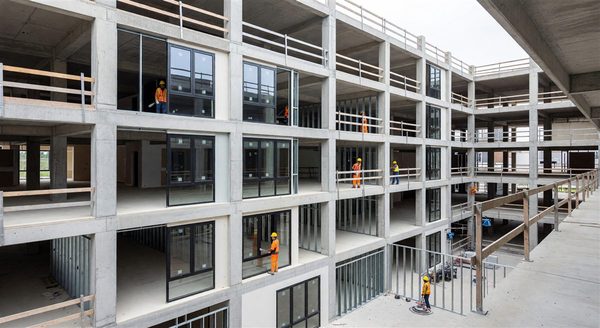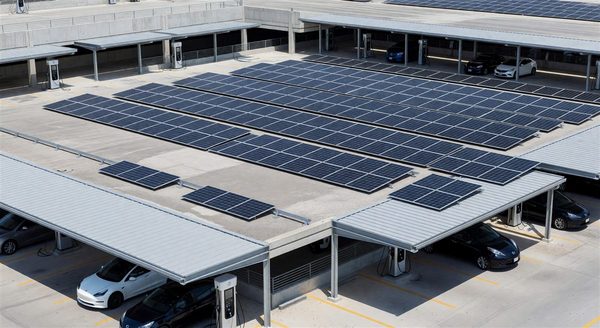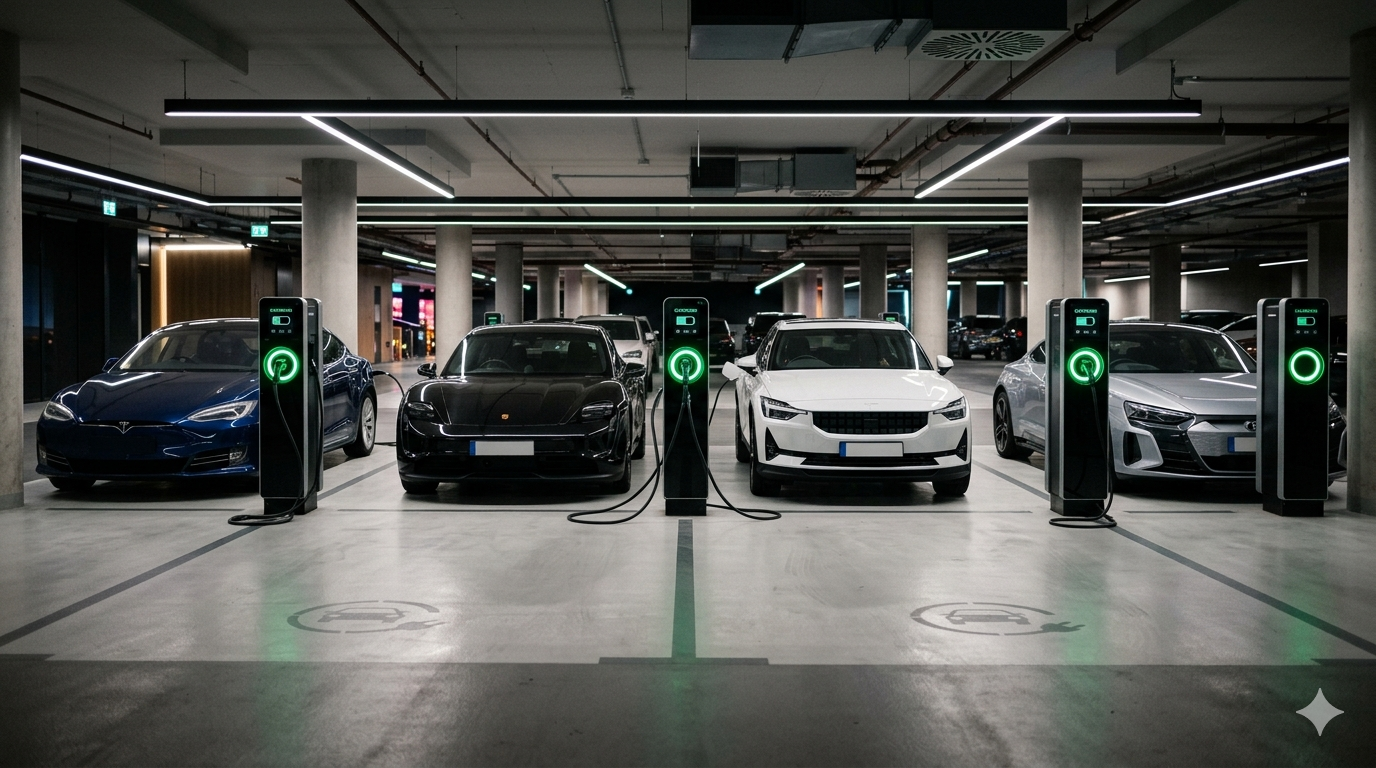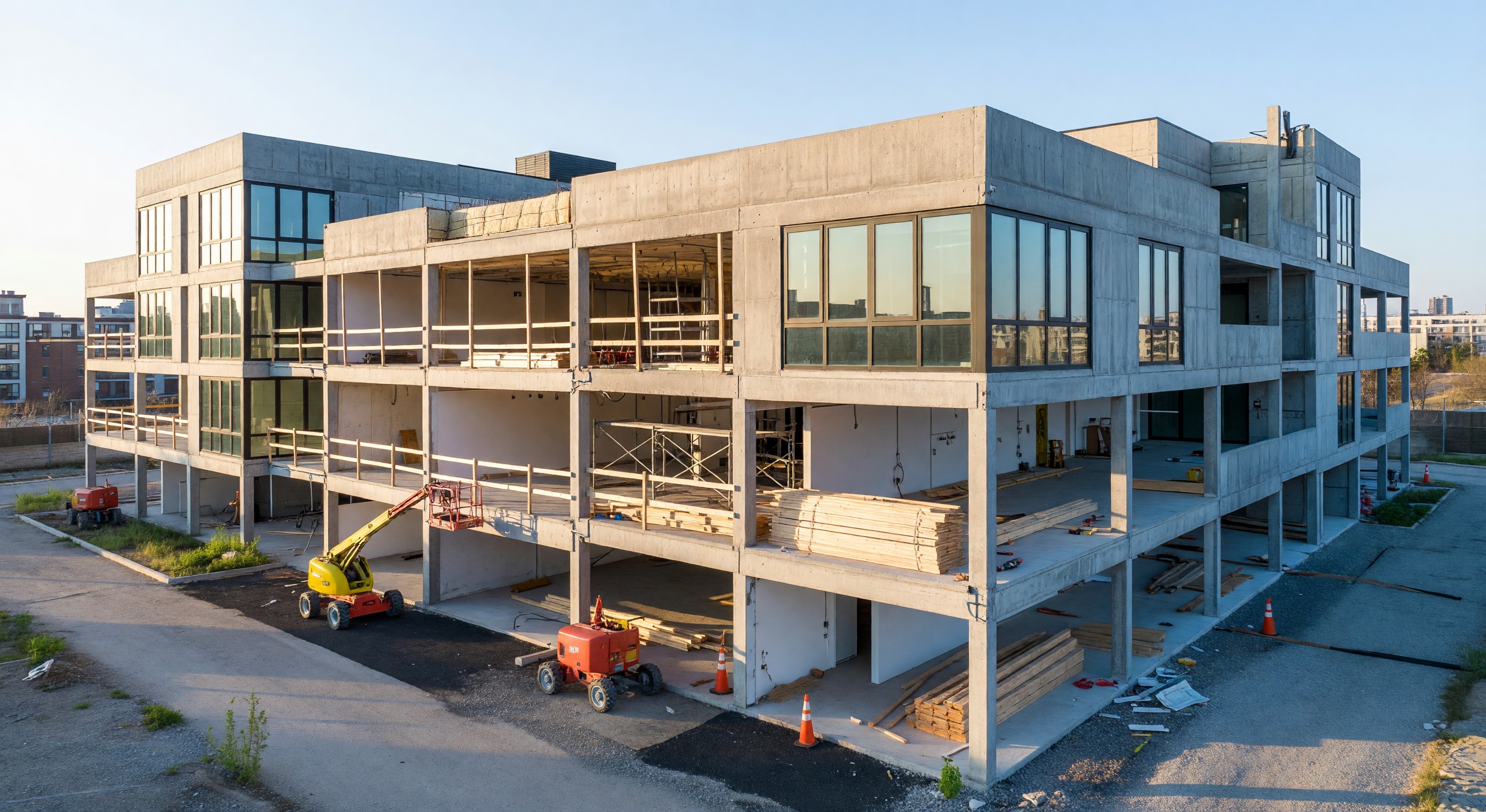
As parking demand softens in urban markets and cities reconsider their parking policies, the question of what to do with underperforming parking structures has moved from theoretical to pressing. Thousands of above-ground parking structures built between 1960 and 2010 are reaching the midpoint of their structural service lives simultaneously with a period of reduced parking demand — creating an opportunity and a challenge for urban redevelopment. Adaptive reuse of parking structures is not universally feasible, but where it is, the environmental and economic case can be compelling.
The Adaptive Reuse Opportunity
Parking structures represent substantial embodied carbon — the concrete, steel, and energy invested in their construction. Demolishing a functional structure and rebuilding generates new embodied carbon that requires decades of operational savings to offset. Adaptive reuse preserves embodied carbon, reduces construction waste, and delivers new habitable space with a fraction of the material impact of new construction.
The financial case for adaptive reuse depends on the relative cost of conversion versus demolition-and-rebuild, and the value of the converted use at the location. In markets where housing is scarce and land is expensive, converting a parking structure to residential use can be financially competitive with new construction — particularly when the structure’s location (urban proximity, transit access) is already established.
Key Design Constraints
Parking structures were not designed for human habitation. Converting them to residential, office, or retail use requires resolving fundamental design incompatibilities:
Floor-to-floor height: The most critical constraint. Standard parking structure floor-to-floor heights of 8.5 to 9.5 feet are below the minimum for most residential and commercial uses. Comfortable residential space requires 9 to 10-foot floor-to-floor minimum; office prefers 12 to 14 feet to accommodate mechanical systems above dropped ceilings. A parking structure with 8.5-foot floors cannot provide comfortable residential or office space without structural modification.
Some structures were designed with taller floor-to-floor heights — particularly those with split-level (split-deck) configurations that use 6- to 7-foot half-level rises, or those with mechanical-level clearances above the typical parking level. These structures may have more conversion potential than the nominal floor-to-floor suggests.
Flat floor requirement: Split-deck parking structures — where alternating half-levels are offset by half a story — cannot be converted to habitable floor plates without major structural intervention. The sloped decks and split-level organization that make these structures efficient for parking make them nearly unusable for any other purpose. Flat-deck parking structures have dramatically better conversion potential.
Structural loading: Parking structures are designed for live loads of 40 to 50 psf under ASCE 7. Residential use requires 40 to 50 psf; most parking structures already meet residential live load requirements. Office use may require up to 80 to 100 psf at some areas, which may require structural upgrading.
Column spacing: Parking’s 60-foot structural bays create column grids that don’t align naturally with residential unit layouts. Column-free spans in residential prefer 20 to 30 feet. Adapting a 60-foot bay grid to residential requires creative unit planning that accommodates or masks interior columns.
Natural light and ventilation: Open parking structures have perforated or partially open facades that provide ventilation but no weather protection or thermal performance. Converting to habitable space requires new facade systems that provide weather barrier, thermal insulation, and controlled natural light. This is a significant construction scope that adds substantially to conversion cost.
Plumbing infrastructure: Parking structures have no plumbing rough-in infrastructure. Residential or hotel conversion requires entirely new plumbing distribution — wet walls, waste stacks, and water supply — installed in a structure with no provision for them in the original design.
Structural Assessment for Conversion
Before designing a conversion, a thorough structural assessment is required to determine:
- Actual structural condition (degree of corrosion, spalling, prior damage)
- As-built structural capacity versus the demands of the intended new use
- Foundation capacity for any load changes
- Seismic capacity assessment if the structure is in a seismically active region
ASCE 41 provides the framework for evaluating existing structures for seismic adequacy. A structural engineer specializing in existing buildings and adaptive reuse should lead this assessment, not a design engineer unfamiliar with as-built evaluation.
Successful Conversion Examples
Several completed parking structure conversions provide evidence of feasibility across use types:
Residential conversion: Projects in Cleveland, Denver, and smaller cities have successfully converted 1960s to 1980s municipal parking garages to market-rate and affordable housing. The key enablers: flat-deck construction, floor-to-floor heights of at least 9 feet, and favorable locations where housing demand justified conversion investment.
Office conversion: Parking structures with taller floor-to-floor heights (10+ feet) and flat decks have been converted to creative office space. Exposed concrete soffits, generous natural light from enlarged facade openings, and urban locations make these conversions desirable to tech and creative economy tenants.
Hybrid arts/maker uses: Some older parking structures in artistically active urban neighborhoods have been converted to gallery, studio, or maker space uses that are more tolerant of lower ceilings, exposed structure, and industrial finishes. These are lower-conversion-cost applications that can serve as transitional uses while the market evolves.
Frequently Asked Questions
What is the most important factor in determining if a parking structure can be converted? Floor-to-floor height. Structures with less than 9 feet floor-to-floor cannot practically be converted to comfortable residential or office space without structural modification. Flat-deck structures with 10 to 12-foot floor-to-floor height have the best conversion potential.
Can split-deck parking structures be converted? Rarely, and at very high cost. Split-deck structures have staggered floor plates that cannot function as habitable space without major structural reconstruction. Their conversion potential is generally poor compared to flat-deck structures.
How does parking structure adaptive reuse compare in cost to new construction? Costs vary widely by structure condition, floor-to-floor height, and intended use. Where conversion is feasible, costs of $80 to $150 per square foot (converted) have been reported for residential conversions in favorable structures — compared to $250 to $400 per square foot for new construction in the same markets. However, structural complications or low floor-to-floor height can drive conversion costs above new construction.
What environmental benefit does parking structure conversion provide? Adaptive reuse avoids the demolition waste and new material embodied carbon of demolish-and-rebuild. For a 100,000 square foot parking structure, demolition and new construction might generate 2,000 to 4,000 metric tons of CO₂e in embodied carbon; conversion might reduce this by 50 to 70 percent.
Takeaway
Adaptive reuse of parking structures is a growing urban planning and development strategy as parking demand moderates and cities seek to reduce parking supply while adding housing and commercial space. The feasibility depends fundamentally on structural characteristics — particularly floor-to-floor height and flat versus split-deck construction — that were not designed with future conversion in mind. Building new parking structures today to adaptable standards (10 to 12-foot floor-to-floor, flat decks, adequate structural loading) preserves the long-term conversion option at modest additional upfront cost, which is a defensible investment given the uncertainty in long-term parking demand.
Further Reading from Authoritative Sources
- EPA embodied carbon and sustainable building materials guidance — The EPA publishes guidance on embodied carbon, construction waste reduction, and sustainable building practices directly relevant to the environmental case for adaptive reuse presented in this article.
- Federal transit and infrastructure policy on parking supply adaptation — The U.S.