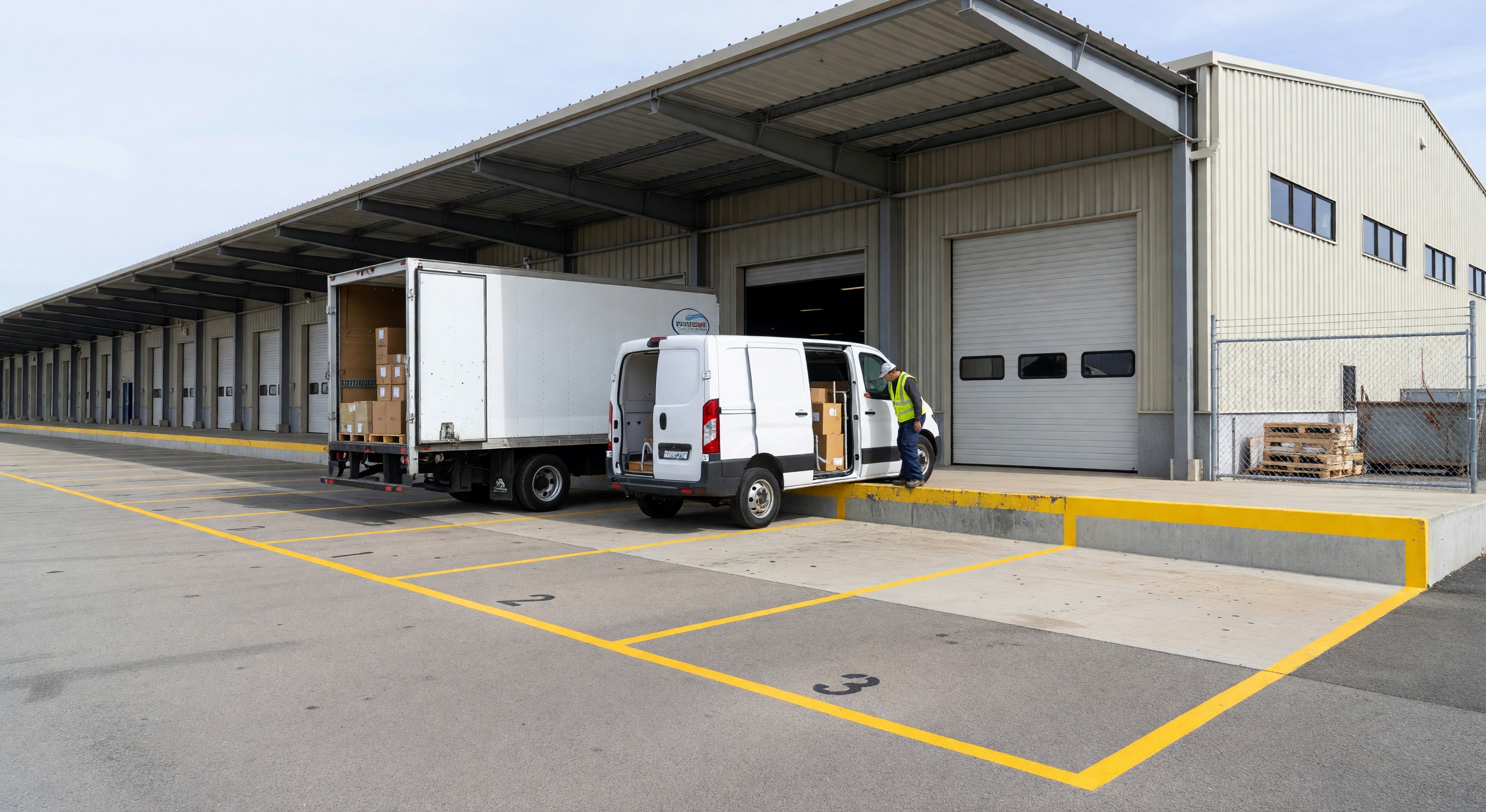
Loading zones are frequently treated as an afterthought in parking and site design, yet inadequate loading generates some of the most visible and persistent operational problems in commercial facilities: double-parked delivery trucks blocking traffic, conflicts between delivery vehicles and customers, loading dock congestion causing backup delays, and illegal use of accessible parking spaces by delivery drivers who have nowhere legal to stop. Effective loading zone design is as important as parking design for the operational success of commercial and mixed-use properties.
Loading Berth Requirements
The basic unit of loading zone design is the loading berth — a dedicated parking space of sufficient size for the design vehicle to load or unload without blocking traffic circulation. Berth dimensions depend on the largest delivery vehicle expected to use the facility:
- Passenger car/van delivery (UPS, FedEx, food delivery): 10 feet wide × 25 feet long is the minimum practical berth. These vehicles park with the rear to the curb; 25 feet accommodates a full-size cargo van with rear doors open.
- Single-unit truck (SU-30 design vehicle): 12 feet wide × 55 feet long. This accommodates most straight trucks (box trucks, refuse trucks, furniture delivery) with room for door opening and maneuvering.
- Semitrailer (WB-62 design vehicle): 14 feet wide × 80 feet long, with a turning radius of 45 feet for the vehicle path. This accommodates the 53-foot trailer typical of large retail, grocery, and wholesale deliveries.
The number of berths required for a given development is estimated by generation rates from the ITE Trip Generation Manual (freight trip edition) and National Cooperative Freight Research Program (NCFRP) loading dock research. Retail uses generate the highest berth demand; office uses have lower demand concentrated in morning mail and supply delivery.
On-Street vs. Off-Street Loading
For urban mixed-use developments, loading can be accommodated on-street (curbside loading zones) or off-street (on-site docks or surface loading areas). Both approaches have trade-offs:
Curbside loading uses the public right-of-way and does not require on-site land for loading infrastructure. Curbside berths must be coordinated with municipal parking and traffic management. Time-restricted loading zones (typically 15 minutes to 4 hours depending on demand) allow multiple deliveries at the same location during the day. The growth of e-commerce delivery has significantly increased demand for curbside loading across North American urban areas.
Off-street loading docks remove delivery vehicle activity from the public street but require land allocation on-site. Dock approaches must accommodate the design vehicle’s turning path — semitrailers require approximately 60 feet of maneuvering apron in front of the dock face and a clear sweep radius for the tractor turn. Dock height for truck loading is typically 48 to 52 inches above finished floor (adjustable dock levelers bridge the gap between dock height and varying trailer floor heights).
Many mixed-use developments incorporate subsurface loading docks with ramp access, removing delivery vehicles from the streetscape entirely. Ramp grades for truck access should not exceed 12 to 15 percent; tighter grades create undercarriage contact and trailer separation risks.
Time Limit Design
Time limits on loading zones balance the need for turnover (multiple delivery vehicles using the same berth) against the delivery time required for the type of deliveries being accommodated. Common configurations:
- 15-minute limit: Appropriate for restaurant supply, pharmacy, and small parcel delivery. High turnover; works in zones with frequent small delivery vehicles.
- 30-minute limit: Standard for most commercial delivery applications. Allows light retail stock deliveries and multi-stop parcel carriers.
- 2-hour limit: Appropriate for office and service delivery, contractor supply access, and lower-density delivery zones.
Variable time limits — shorter during peak delivery hours (6 a.m. to 3 p.m. weekdays), extended in evenings and weekends — are used in high-demand urban locations. Some cities (New York, San Francisco, Seattle) have implemented freight loading zones with curb management technology: sensors detect vehicle presence and duration, with enforcement triggered automatically after time limit expiry.
Last-Mile Delivery and Micro-Hubs
The growth of e-commerce has fundamentally changed the delivery vehicle mix arriving at commercial properties. Small parcels once delivered by dedicated UPS or FedEx routes are now also delivered by Amazon Flex drivers in personal vehicles, DoorDash couriers on bicycles, and robotics platforms. Loading zone design that only contemplates traditional freight delivery vehicles misses a large and growing fraction of actual delivery activity.
Forward-looking loading zone designs incorporate:
- Bike and e-bike parking adjacent to loading zones for last-mile courier access
- Sidewalk clear zones (8 feet minimum) to allow cargo bike loading without blocking pedestrian flow
- On-site micro-hub spaces — protected loading areas for carriers that operate daily consolidation runs with final delivery via cargo bike or autonomous device
NACTO’s Urban Street Design Guide and FHWA’s Freight Management and Operations resources provide current thinking on curb management for last-mile delivery, including geometric standards for various delivery mode types.
Frequently Asked Questions
What are the minimum dimensions for a commercial loading berth? For passenger car and van delivery, 10 × 25 feet is the minimum practical berth. For standard truck deliveries, 12 × 55 feet accommodates most single-unit trucks. Semitrailer docks require 14 × 80-foot berths with 45-foot turning radii for the approach path.
How many loading berths does a retail development need? Required berths depend on retail square footage and tenant mix. Large-format grocery and wholesale retail may require 4 to 8 berths; strip retail requires proportionally fewer. ITE’s freight trip generation data and NCFRP research provide generation rates by land use type.
Can a loading zone be on-street or does it need to be on-site? Both are used. On-street curbside loading zones coordinate with municipal curb management and do not consume on-site land. Off-street loading docks provide a controlled environment but require land allocation and truck maneuvering aprons. Dense urban developments often combine both approaches.
How are time limits set for loading zones? Time limits are matched to the type of delivery activity expected: 15 minutes for small parcels and restaurant supply; 30 minutes for general commercial delivery; 2 hours for office and service delivery. Variable time limits based on time of day are used in high-demand urban loading zones.
Takeaway
Loading zone design is a functional and operational necessity that deserves the same rigor as parking layout design. Proper berth dimensions, realistic time limits, and thoughtful separation of delivery vehicles from customer traffic are the foundation of effective loading infrastructure. As last-mile delivery volumes grow and delivery modes diversify, forward-looking facilities are designing for bicycle couriers, cargo e-bikes, and micro-consolidation as well as traditional freight vehicles. Starting with the right dimensions and regulatory framework ensures loading infrastructure serves the development throughout its life without generating the chronic congestion and conflict that poorly designed loading generates from day one.
Further Reading from Authoritative Sources
- FHWA Freight Management and Operations curb management resources — FHWA is explicitly named in the article as a source for freight management and curb management guidance.
- NACTO Urban Street Design Guide loading and curbside standards — NACTO is explicitly cited in the article alongside FHWA as the primary reference for urban street and curbside design standards.